


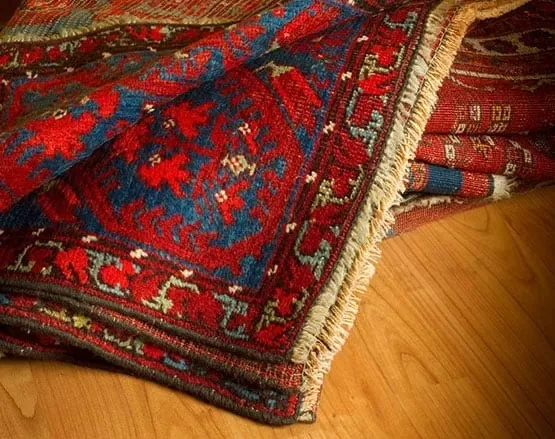
While the modern word “carpet” is derived from the old Italian term carpita, meaning “plucked”, the story of carpets stretches back far beyond language itself. Long before carpets became a staple of modern interiors, they played a vital role in daily life, culture, and craftsmanship across ancient civilisations.
Early carpets—hand-knotted rugs made from wool sourced from sheep or goats—were used not only as floor coverings, but also as wall hangings, table coverings, and insulation. Evidence suggests woven textiles and rugs date back at least 4,000 to 5,000 years, with some archaeological findings indicating that animal fibres were spun and woven as far back as 9,000 years ago during the Neolithic period.
Although historians still debate the exact birthplace of carpet weaving, most agree it originated somewhere around the Caspian Sea or the Armenian Highlands.
The World’s Oldest Known Carpet
The oldest surviving pile carpet in existence is the famous Pazyryk Carpet, dating back to the 4th or 5th century BC—making it approximately 2,500 years old.
Discovered in 1949 within a frozen burial mound in the Altai Mountains of Siberia, the carpet was preserved in ice for centuries. Measuring 200cm by 183cm, it features intricate patterns and rich colours that highlight the remarkable skill of ancient weavers.
From Celebration to Everyday Use
It’s believed that carpets were initially created for ceremonial and celebratory purposes. Over time, they became practical household items, especially among nomadic tribes. Carpets provided warmth and insulation inside tents without the need to use valuable animal hides, making them both functional and economical.
As techniques evolved, carpet weaving grew into a formal industry—most notably in Persia—before spreading throughout Asia.
The Rise of Carpet Weaving Across Cultures
Persia (modern-day Iran) is widely regarded as the heart of traditional carpet weaving. From there, the craft spread across regions including Turkey, Afghanistan, Armenia, India, Pakistan, and China, with each culture developing distinct patterns, materials, and weaving methods.
Venetian explorer Marco Polo famously remarked during his travels in Turkey:
“They weave the choicest and the most beautiful carpet in the world.”
Today, many of these historic weaving traditions influence the rugs and carpets that require specialist care through services such as professional rug cleaning.
Carpets Arrive in Europe
Europe was slow to adopt carpets as floor coverings. Until the 1700s, the word “carpet” referred broadly to heavy decorative textiles used on walls, tables, or floors.
As trade routes between Western Europe and Persia expanded in the 18th century, carpets gained popularity as luxury household items. Over time, they transitioned from decorative symbols of wealth to practical elements of everyday living.
Persia’s Lasting Influence on Carpet Making
Today, Iran remains the world’s largest producer of hand-woven carpets, accounting for an estimated 75% of global production and around 30% of worldwide exports. It is also home to the largest handmade carpet ever created, covering an astonishing 5,625 square metres.
Persian carpet weaving is believed to date back to the Bronze Age, with surviving examples from the Safavid Dynasty (1501–1736). Due to Islamic traditions, many Persian carpets feature intricate geometric designs, florals, and symbolic motifs rather than depictions of people or animals. While most are woven from wool, some—particularly from regions like Kashan—are crafted from silk.
Antique vs Modern Carpets
Today, carpets woven using natural dyes before the introduction of synthetic dyes in the 1860s are often classified as antique carpets. Some definitions extend this category to include all carpets made prior to around 1920. Carpets produced after this period are generally considered modern carpets.
Whether antique or modern, preserving these textiles requires expert care and specialist carpet cleaning techniques to protect fibres, colours, and value.
Caring for Carpets with a Rich History
Carpets have evolved from ancient necessities to treasured household assets. With proper maintenance, they can last generations—especially when cleaned and cared for by professionals who understand their materials and construction.
Need Expert Carpet or Rug Care?
Book professional carpet or rug cleaning with Elite Maintenance Services
Learn why Australians trust Elite on our About Elite page
Explore our full range of specialist cleaning services designed to protect valuable carpets