


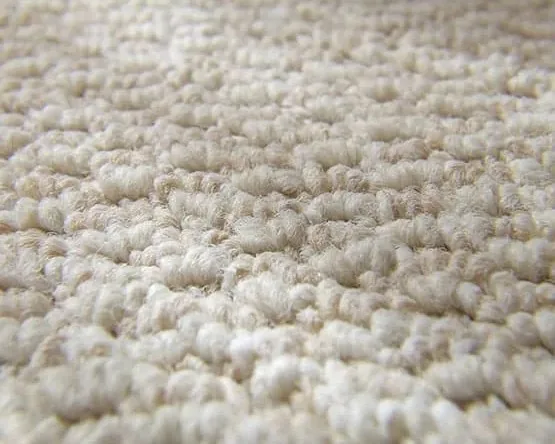
We’ll admit it — we don’t often spend much time speculating about the future of carpet. With so many carpets to clean every day, there’s rarely time to wonder what’s coming next. That said, some recent developments in carpet technology are too interesting not to share.
Over the past two decades, most carpet innovation has focused on synthetic materials designed to deliver three key benefits: improved colour fastness, increased stain resistance and lower manufacturing costs. As discussed previously in What is the best carpet: synthetic or natural?, carpet performance has improved dramatically in all of these areas.
Now, the next evolution of carpet may take a completely different direction — intelligent carpets.
Intelligent Carpets: Lighting the Way Forward
Dutch technology company Philips, in partnership with carpet manufacturer Desso, has been trialling carpet embedded with LED lighting. This innovative design places a layer of LED lights beneath a specially developed light-transmissive carpet surface.
From above, the carpet looks completely normal — until the LEDs are activated. When lit, the carpet can display patterns, colours, symbols or messages directly through the flooring.
Potential applications include wayfinding in large public spaces such as airports, conference centres and entertainment venues. Messages, arrows and directions can be programmed into the carpet itself, which may be more effective than wall signage given how often people naturally look down while walking.
Other possible uses include mood lighting for rooms, illuminated emergency exit paths similar to aircraft cabin lighting, or even discreet in-floor “Do Not Disturb” indicators in hotels. This technology is expected to open new possibilities for design, safety and functionality in commercial environments.
Carpets Designed to Improve Indoor Air Quality
Desso is also leading innovation in another important area — indoor air quality. One of its developments, AirMaster carpet, is designed specifically to reduce airborne allergens.
Health professionals have traditionally warned allergy sufferers against wall-to-wall carpet, believing it releases dust and fibres into the air as people walk across it. Carpet manufacturers, however, argue the opposite — that carpet traps particles rather than dispersing them.
AirMaster carpet takes this concept further by using the physical structure of the fibres, rather than chemicals, to trap and immobilise fine dust particles. Larger particles are captured by thicker yarns lower in the pile, while ultra-fine filaments in the upper pile trap particles smaller than 10 micrometres.
Independent testing by a German institute found the AirMaster carpet to be significantly more effective at retaining fine dust than both hard flooring and standard carpet.
Why This Matters for Workplaces and Public Spaces
These advances are particularly relevant when you consider how much time people spend indoors. The average office worker spends around 1,800 hours per year in their workplace, often in high-traffic environments where dust is constantly disturbed.