How to Be CM3 Certified
Many businesses ask how to become CM3 certified. The process involves submitting documentation and undergoing an independent assessment to verify compliance.
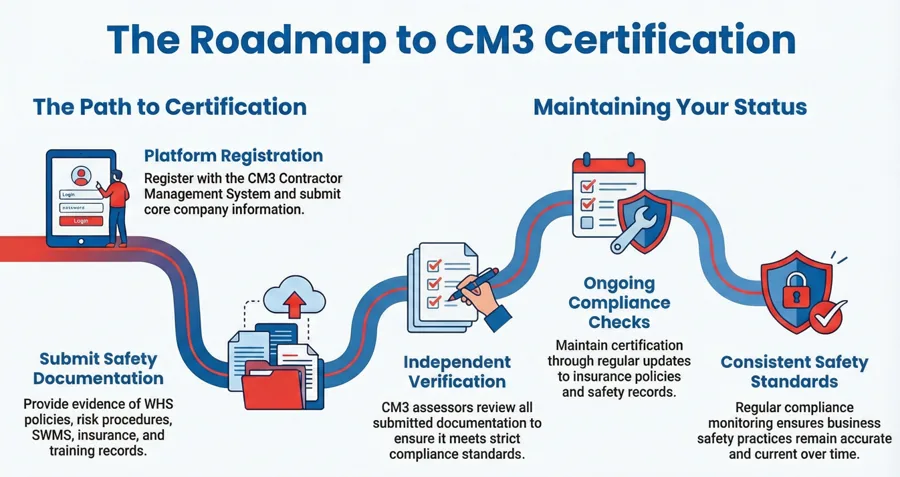
1. Register with the CM3 Contractor Management System
The first step is registering with the CM3 platform, where contractors submit company information and compliance documentation.
2. Provide Safety and Compliance Documents
To obtain certification, companies must submit evidence of their safety systems, including:
- Work Health and Safety policies
- Risk management procedures
- Safe Work Method Statements (SWMS)
- Insurance certificates
- Staff training records
These documents demonstrate that the business operates according to recognised safety practices.
3. Independent Review and Verification
CM3 assessors review the submitted documentation to ensure it meets compliance standards.
If requirements are met, the company receives CM3 certification, confirming that it has passed the contractor prequalification process.
4. Ongoing Compliance
CM3 certification must be maintained through regular updates and compliance checks. Contractors need to keep their:
- Insurance policies current
- Safety documentation updated
- Compliance records accurate
This ensures safety standards remain consistent over time.
CM3 Certification and Professional Restoration Services
In industries such as water damage restoration, mould remediation, and fire restoration, compliance and safety systems are crucial. Professional restoration work often occurs in high-risk environments, including commercial buildings, healthcare facilities, and large infrastructure sites.
As a result, clients frequently require contractors to hold certifications that demonstrate adherence to safety and operational standards.
Elite Maintenance Services Group operates using a compliance-focused service model. This includes contractor compliance verification through CM3 and alignment with industry restoration standards.
This structured approach ensures the safe and documented delivery of services such as:
CM3 vs Other Industry Certifications
CM3 certification focuses primarily on contractor compliance and workplace safety systems, while other certifications focus on technical expertise.
For example:
- CM3 certification verifies WHS compliance and contractor risk management
- IICRC certification verifies technical knowledge in cleaning and restoration standards
Together, these certifications help ensure contractors operate safely and deliver work according to professional industry guidelines.
Conclusion
CM3 certification plays a vital role in ensuring contractors meet safety, compliance, and risk management standards before working on commercial or high-compliance sites.
For businesses and property managers, choosing a CM3-certified contractor provides peace of mind that the company has been independently assessed and verified for safety and operational compliance.
If you require professional restoration or maintenance services delivered with a strong compliance framework, you can request assistance here.
Or speak directly with our team:
131580



.webp)