

Loading...

Understanding how to clean mouldy carpet starts with knowing that mould contamination is usually best handled by trained professionals.

Small surface spots may sometimes be treated carefully, but deeper mould growth in carpet fibres or underlay typically requires professional remediation.

Mould can spread quickly through carpet layers and release spores that affect indoor air quality.

If the contamination is larger than a small patch, professional cleaning is strongly recommended.

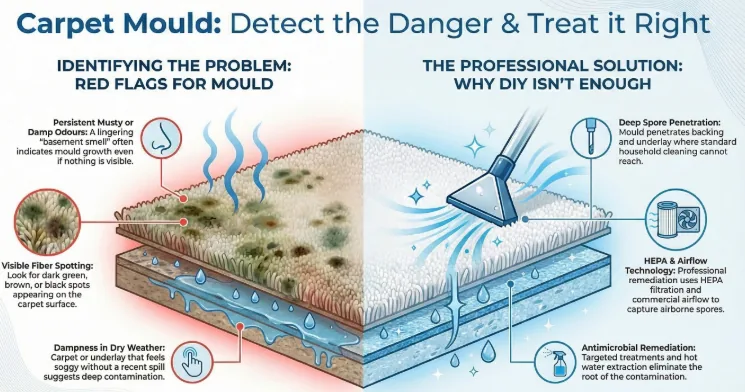
Signs Your Carpet May Have Mould

Look for these common indicators of mould contamination.

  • Persistent musty or damp odour in the room.
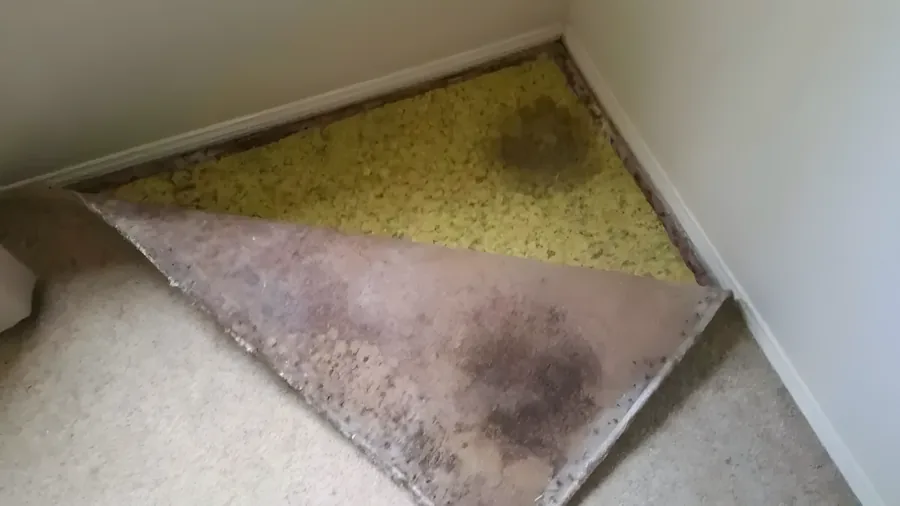
  • Dark green, brown, or black spotting on carpet fibres.
  • Carpet feels damp even in dry weather.
  • Discoloured or soggy carpet underlay.

If several of these signs appear together, professional inspection is advised.

Why Professional Cleaning Is Recommended

Mould rarely stays only on the surface of the carpet.

Spores can penetrate fibres, backing materials, and underlay where normal cleaning cannot reach.

Professional remediation uses specialised equipment to remove contamination safely.

Professional treatment often includes

  • HEPA filtration to capture airborne spores.
  • Hot water extraction or professional cleaning methods.
  • Approved antimicrobial treatments.
  • Controlled drying with commercial airflow equipment.

This process helps prevent mould from spreading or returning.

When a Small DIY Clean May Be Possible

A minor DIY clean may be considered only under specific conditions.

  • The mould patch is very small (around a coin or thumb size).
  • The carpet backing and underlay are completely dry.
  • The moisture source has already been fixed.
  • The contamination appears only on the surface fibres.

If the affected area is larger or deeper, professional treatment is the safer choice.
How To Clean Mold From Carpet? Natural And Easy Solutions

How to Clean Mouldy Carpet (Small Surface Spots Only)

If the mould is extremely minor, follow careful steps to reduce contamination.

  • Wear gloves and a mask before starting.
  • Open windows and increase ventilation.
  • Vacuum dry particles using a HEPA-filter vacuum if possible.
  • Lightly mist the area with a vinegar and water solution (1:1 ratio).
  • Gently blot the carpet with clean microfiber cloths.
  • Dry the carpet quickly using fans or a dehumidifier.

If the smell remains or mould returns, professional cleaning is recommended.

Situations That Always Require Professional Help

Some mould situations should never be handled with DIY cleaning.

  • Mould covering a large section of carpet.
  • Contamination spreading across multiple rooms.
  • Water damage from flooding or plumbing leaks.
  • Carpet soaked through to the underlay.
  • Mould returning after cleaning attempts.

In these cases, professional remediation prevents further spread and property damage.

Proper Drying Is Critical

Moisture control is essential to stop mould regrowth.

  • Run fans to move air across the carpet surface.
  • Use a dehumidifier to remove moisture from the air.
  • Lift carpet edges if safe to dry the underlay.
  • Ensure the carpet dries completely before normal use.

Preventing Carpet Mould

Preventing moisture is the most effective mould control strategy.

  • Repair leaks quickly.
  • Ventilate bathrooms and laundry areas.
  • Keep indoor humidity below 60% if possible.
  • Clean spills immediately.
  • Allow carpets to dry fully after professional cleaning.

Industry Standards and Best Practice

Professional mould remediation should follow recognised industry standards.

Elite services align with IICRC standards for safe and effective cleaning procedures.

Our certified teams operate nationwide, delivering with compliance and providing documented reporting.


FAQs About Cleaning Mouldy Carpet

Can mouldy carpet be cleaned?

Yes, in many cases, mould contamination can be professionally cleaned and treated. However, severe contamination may require carpet and underlay replacement.

Does vinegar kill mould in carpet?

Vinegar may help treat small surface spots, but it does not remove mould that has spread through carpet backing or underlay.

How long should carpet take to dry after cleaning?

With professional airflow and drying equipment, carpets often dry within 6–12 hours, depending on conditions.

Can mould return after cleaning?

If moisture remains in the carpet or underlay, mould may return. Proper drying and moisture control are essential.

Need Help with Mould in Carpet?

If you are unsure how to clean mouldy carpet safely, a professional inspection can identify contamination and recommend the correct treatment.

Call our team for immediate assistance.

Request a quick quote online to arrange professional service.


Talk to Our Team

Engage a provider built for compliance, scale, and long-term asset protection.

Call 131 580 Elite Logo Enquiry Elite Logo Booking