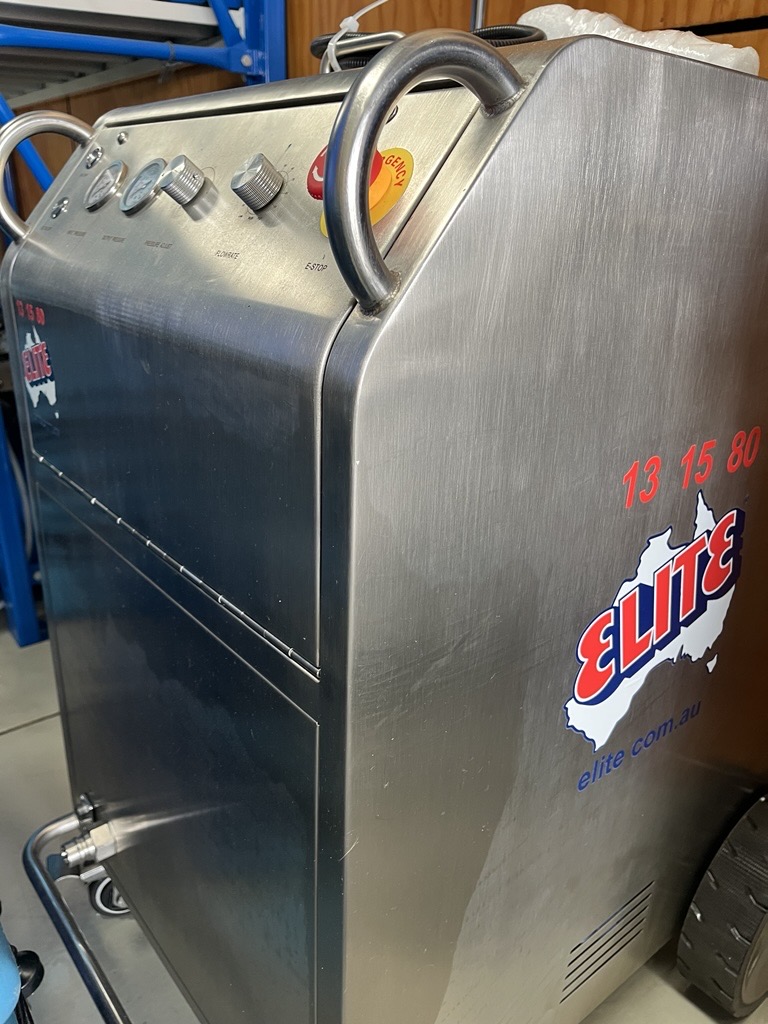
Dry ice blasting in Brisbane suits jobs where water, chemicals or grit would do more harm than the dirt. Small pellets of frozen carbon dioxide are driven at the surface by compressed air. The impact and the sudden cold crack the build-up away, and the pellets turn into gas, so the only thing left to collect is what came off.
That makes it useful on switchboards, production lines and tooling that can’t be wet or stripped down, and on soot, char and mould staining left in a building after a fire or a leak. We take jobs from the CBD and Fortitude Valley out to Hamilton, Bulimba, Toowong and Indooroopilly.
Google4.8★★★★★★★★★★100+ reviews
What's included
Industrial Equipment Cleaning
Non-abrasive cleaning of production lines, motors, conveyors, and machinery without water or chemical residues, suitable for in-situ cleaning during planned downtime.
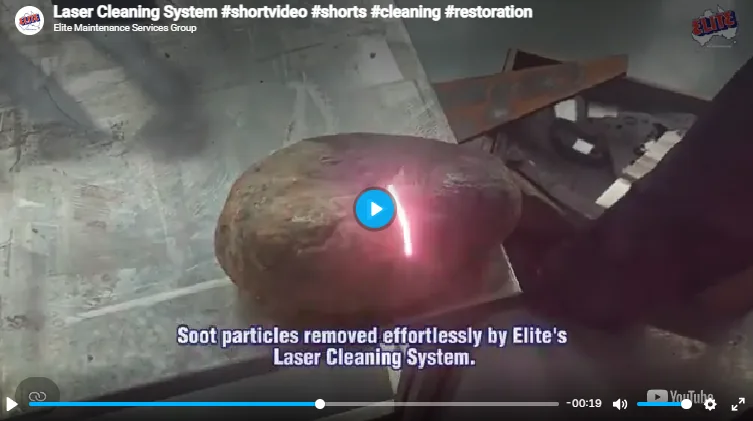
Soot & Fire Damage Remediation
Removal of soot, smoke residue, and combustion byproducts from sensitive surfaces, electronics, and structural elements.
Mould & Contamination Removal
Cleaning of mould-affected timber, concrete, and structural elements with no secondary water damage or chemical exposure.
“We had a pipe burst in our ceiling, water seeped into our walls and our unit was at a very high risk for mould :( Guosheng worked tirelessly to ensure the drying process went as smooth as possible, even working until the evening on a Friday to ensure our walls would be dry and safe over the weekend! An extremely proficient and productive company that thrives on providing excellent service and quality work. Thank you so much for all of your help! <3”
“Guosheng from Elite Restoration did an amazing job dealing with the water damage to my unit, due to a burst pipe. Nothing was too hard and Guosheng had multiple tricks up his sleeve to ensure maximum drying capacity. The communication throughout the whole process was excellent, which made this very stressful situation for me a lot easier to handle. Thanks so much Guosheng.☺️”
A technician visits, looks at the surface, the build-up and the access, and blasts a small patch so you can judge the result.
Anything staying in place is masked or isolated, and the work area is ventilated, because the pellets become carbon dioxide gas.
Blasting starts, with pellet size and air pressure set to lift the soil and leave the surface underneath alone.
Loosened material is vacuumed or swept up. There is no blast media to recover.
The surface is inspected with you, and equipment can go back into service straight away, with nothing to dry.
In a plant room or on a factory floor, the work can be planned around a scheduled shutdown so production loses as little time as possible.
Elite is CM3 certified for contractor safety and compliance, carries $20 million in public and products liability cover, and does its work to the relevant Australian Standards.
Dry ice blasting questions
Will it damage the surface?
Not when it is set up properly. Dry ice is not abrasive like sand or grit, and the test patch shows the finish before the full job goes ahead.
Is there residue or waste afterwards?
Only the soil that was removed. The pellets turn to gas and no water or chemicals are used, so there is no slurry and no spent media to dispose of.
Can equipment be cleaned without pulling it apart?
Usually, yes. Cleaning in place is one of the main reasons people choose it, because it saves the time of stripping down and reassembling machinery.
Is it safe indoors?
Yes, with good airflow. The gas given off displaces air, so the space is kept ventilated while the blasting runs.
What will it not remove?
Heavy rust, mill scale and thick coatings bonded hard to metal. Those need an abrasive method. It also won’t polish or etch a surface.
Is it used after a fire?
Yes. It strips soot and smoke residue from framing, brick and timber without adding moisture. Elite also runs 24/7 restoration for water, fire and mould damage, so the blasting can sit inside a wider recovery job.