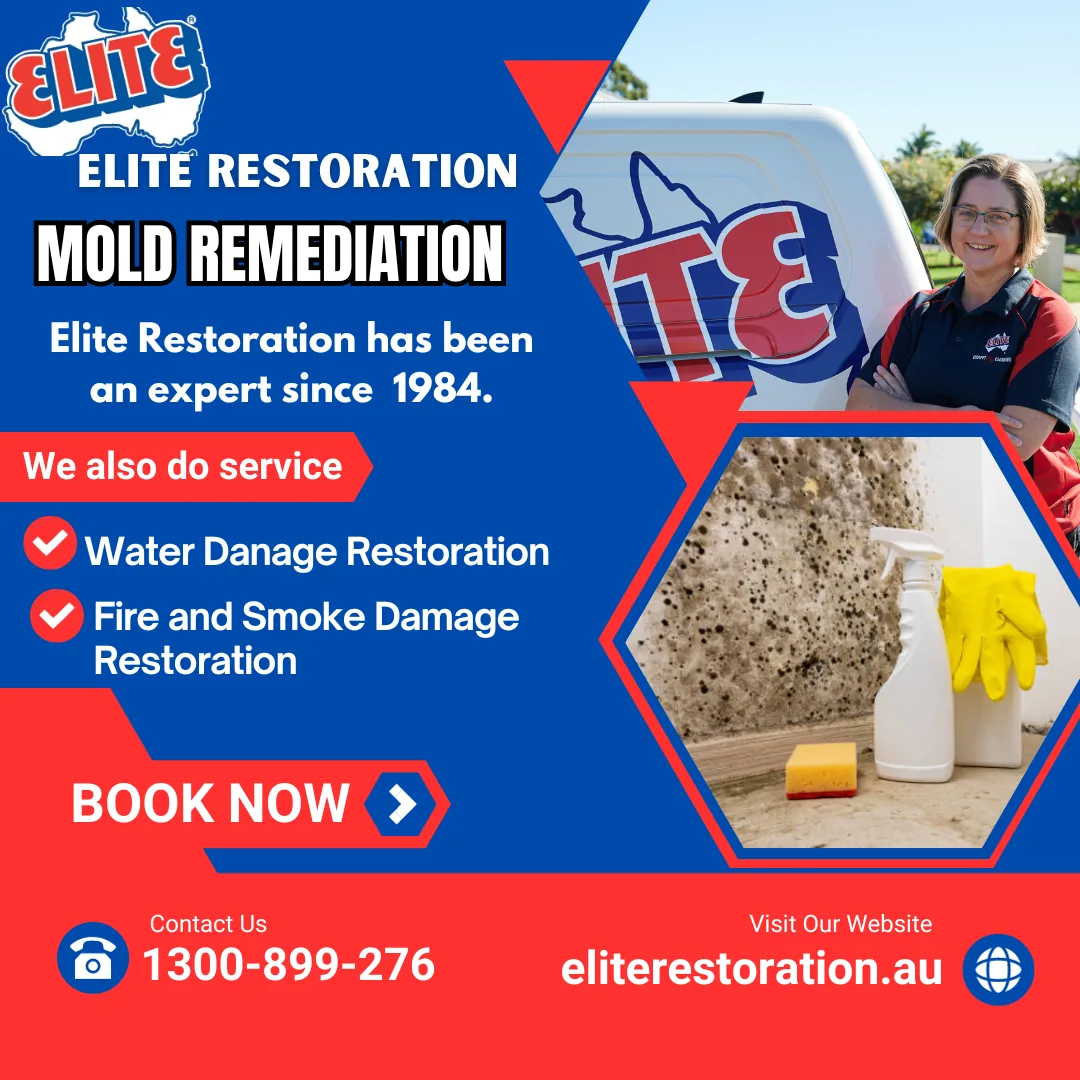
Mould removal and remediation is different from wiping mould off a wall. Remediation finds the moisture that is feeding the growth and deals with it, contains the affected area, removes the material the mould has gone through, treats what stays, and dries the structure so the growth doesn’t return. Elite carries the work out in line with IICRC S520, the mould remediation standard.
A small patch on a bathroom ceiling that comes from steam and poor airflow is a cleaning job and a fan. Growth that keeps returning in the same place, that has spread across a wall or into a wardrobe, or that followed a leak or a flood, is a sign that something is still wet behind the surface, and that is a remediation job.
Google4.8★★★★★★★★★★100+ reviews
What's included
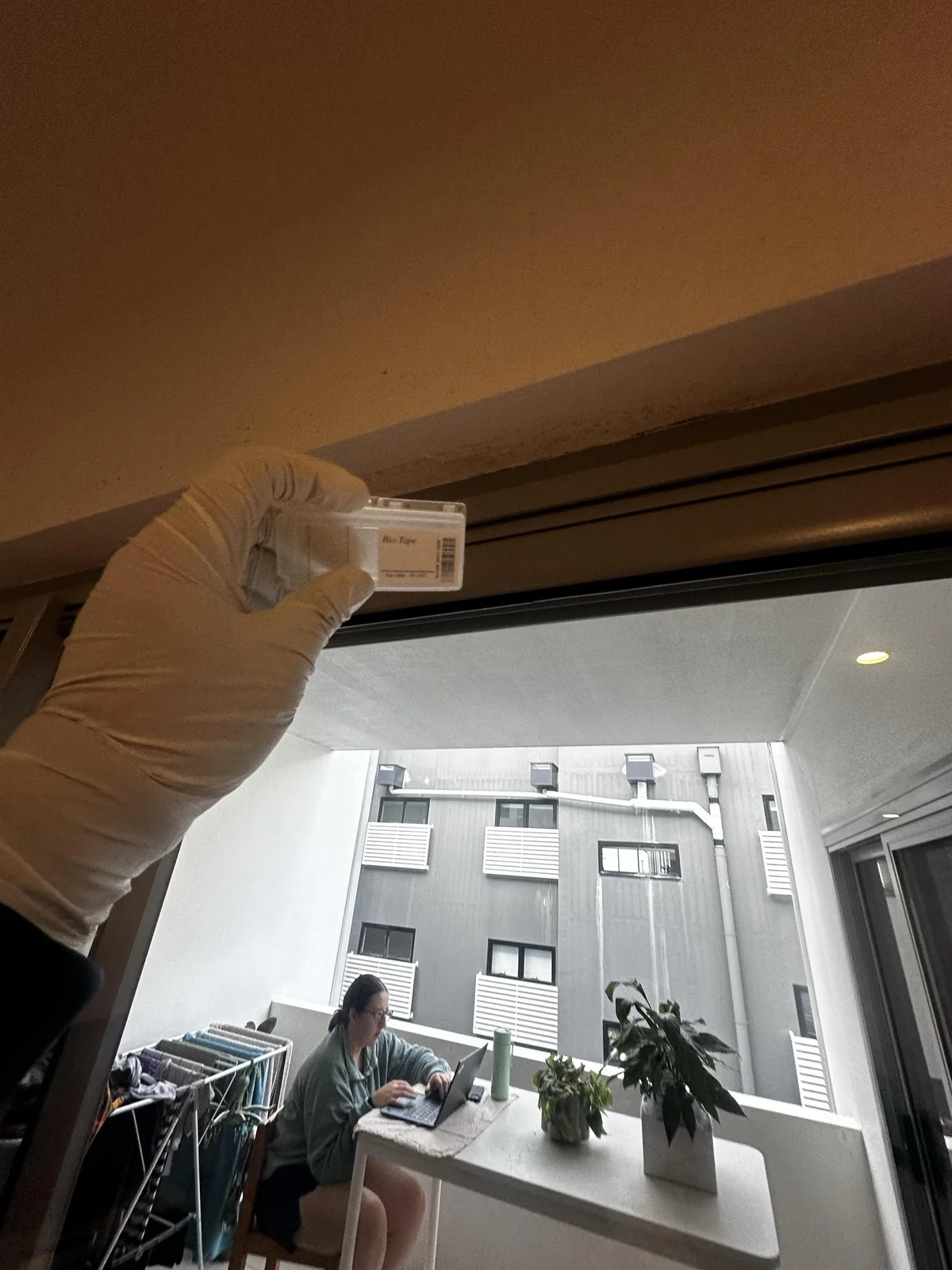
Mould Inspection & Air Quality Testing
IICRC-aligned inspection with moisture mapping, indoor air quality sampling, and documented findings for stakeholders and insurers.
Containment & HEPA Filtration
Negative-pressure containment, HEPA-filtered air scrubbers, and worker decontamination protocols for safe in-situ remediation.
Surface Treatment & Post-Remediation Verification
Antimicrobial application followed by post-remediation verification testing to confirm clearance against project specifications.
“We had a pipe burst in our ceiling, water seeped into our walls and our unit was at a very high risk for mould :( Guosheng worked tirelessly to ensure the drying process went as smooth as possible, even working until the evening on a Friday to ensure our walls would be dry and safe over the weekend! An extremely proficient and productive company that thrives on providing excellent service and quality work. Thank you so much for all of your help! <3”
“Guosheng from Elite Restoration did an amazing job dealing with the water damage to my unit, due to a burst pipe. Nothing was too hard and Guosheng had multiple tricks up his sleeve to ensure maximum drying capacity. The communication throughout the whole process was excellent, which made this very stressful situation for me a lot easier to handle. Thanks so much Guosheng.☺️”
Mould remediation is never a simple clean. Under the
IICRC S520 Standard for Professional Mould Remediation,
treating mould without a proper inspection risks missing the underlying
moisture source and leads to recurrence. Every mould job starts with a
professional inspection by S520-certified technicians, so containment,
controls and the remediation scope are set correctly from day one.
Inspection from $350 inc. GST. Remediation is scoped and
quoted separately, only after the inspection.
Find the cause — identify the moisture source so remediation actually holds.
Set containment — protect unaffected areas during the work.
Clear scope & documentation — written report you can give insurers or strata managers.
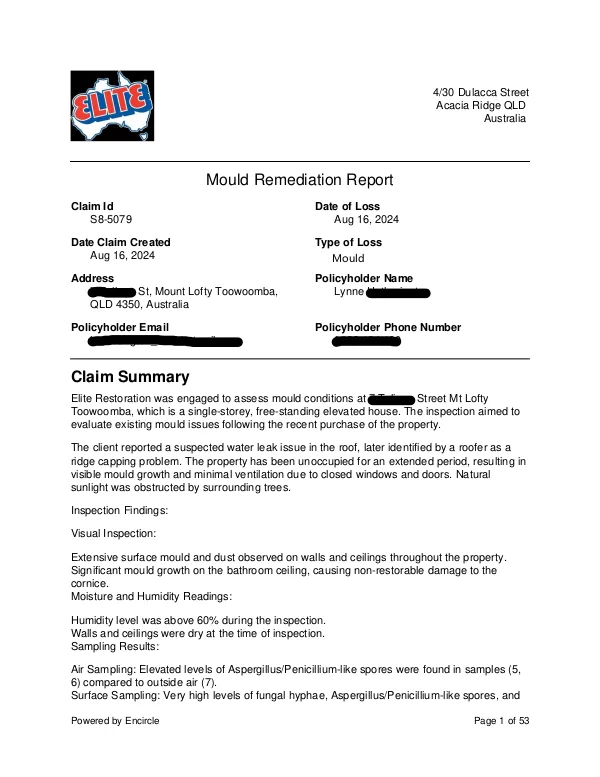
Want to know exactly what you’ll receive? Download a real example of the
written report our S520-certified technicians produce after a mould
inspection — findings, moisture readings, photos and the recommended
remediation scope.
Inspection and source. A technician inspects the affected rooms and traces the moisture to its source: a leak, a roof, a shower recess, a wall that never dried after an earlier event.
Containment. The work area is sealed so spores stay put while the mould is disturbed.
Removal. Plasterboard, carpet underlay, ceiling sheets and other material the mould has gone through comes out. Where an older home has asbestos in the way, removal is done by in-house qualified technicians rather than subcontracted.
Treatment. The surfaces that stay are treated with an antimicrobial.
Drying. The structure is dried, with the drying monitored until it is confirmed, in line with IICRC S500 where the mould followed water damage.
Verification. The job closes with a completion report that records what was found, what was removed and the final condition.
Most homes stay occupied through the job. The contained area is off limits and the rest of the house carries on, with the rooms back in use once the drying is confirmed.
Why mould comes back after a clean
Mould is a symptom of moisture, and Australia supplies plenty of it: a humid subtropical summer in the north, condensation on cold external walls through a southern winter, and leaks and storms everywhere. Older homes with little cross-ventilation, units with shared plumbing, and any room with a wardrobe pushed against an external wall are the usual places. Bleach on the surface buys a few weeks, because the spores are still there and the material behind the paint is still wet. Fixing the source and drying the structure is the part that ends it.
In a customer’s words
Ruby Leach wrote in a Google review after a pipe burst in her ceiling and the unit was at risk of mould: “Guosheng worked tirelessly to ensure the drying process went as smooth as possible, even working until the evening on a Friday to ensure our walls would be dry and safe over the weekend!”
Elite is an IICRC Certified Firm, certificate number 70100265, certified in S520 for mould remediation. The technicians are police-checked and fully insured, the business carries $20 million in public and products liability cover, and every job carries a satisfaction guarantee. The Elite brand has been operating since 1984, with head office in Acacia Ridge, Brisbane, servicing every Australian state and the ACT.
Questions people ask about mould
Is the mould in my home dangerous?
That depends on the extent, the type and who lives there. What is certain is that it won’t improve while the material behind it stays wet, so the inspection is the first step either way.
Can I clean mould myself, or does it need remediation?
A small surface patch from steam can be cleaned and ventilated. Growth that returns, spreads, or followed a leak needs the source fixed and the material dried or removed, which is remediation.
Do I need mould testing or air quality testing first?
Not always. The inspection finds the source and the extent, and testing is added where it would change the scope.
What happens to the contents and furniture?
They are assessed with the room. What can be cleaned and returned, and what is written off, is recorded in the report.