How a dry ice job runs
- Site visit and test patch. A technician looks at the surface, the soil and the access, and blasts a small test area so you can see the result before the job is priced.
- Protect what stays. Nearby equipment, openings and finishes are isolated or masked, and the area is ventilated, because the pellets become carbon dioxide gas as they work.
- The blast. The operator works across the surface with the pellet size and pressure set for the soil and the substrate, so paint, carbon, grease or soot comes off and the surface underneath doesn’t.
- Extraction. The loosened soil is vacuumed or collected. There is no media to recover because the ice is gone.
- Inspection and handover. The surface is checked and the equipment goes back into service. Nothing is wet, so there is no drying time.
What it cleans, and what it is not for
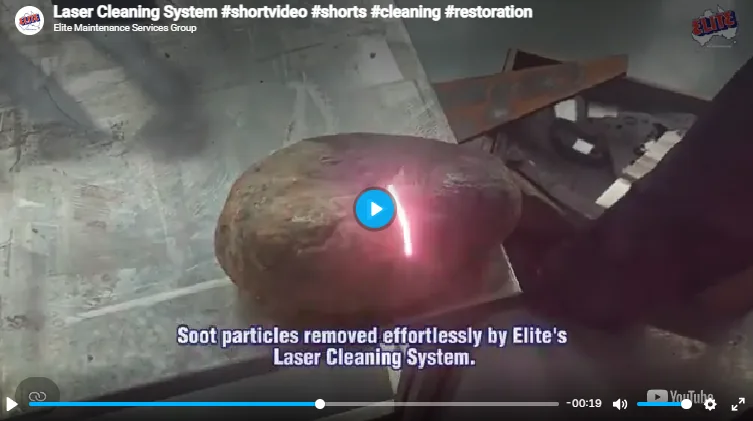
In industry, it is grease and carbon on plant, release agents and build-up on moulds and tooling, ink on printing equipment, and the inside of switchboards and electrical cabinets where water is out of the question. On a restoration job, it strips soot and smoke residue from framing and brick after a fire, and mould staining from timber after a leak, both without the moisture that would restart the problem. On a heritage facade it removes paint and grime from soft masonry without the surface loss of sand or grit.
It is not a cure-all. It doesn’t cut into heavy rust or scale the way abrasive blasting does, it won’t polish a surface, and it needs airflow because of the gas it produces.
In a customer’s words
Mark Briggs wrote in a Google review: “Quick, reliable and efficient, very knowledgeable staff I found that no Job is to big or small, very professional service highly recommend”.
Elite is CM3 certified for contractor safety and compliance, carries $20 million in public and products liability cover, and sends police-checked, fully insured technicians. Where the job is fire or mould residue, the work follows the IICRC S700 and S520 standards the business is certified in. The Elite brand has been operating since 1984, with head office in Acacia Ridge, Brisbane, servicing every Australian state and the ACT.
Dry ice blasting questions
Does dry ice blasting damage the surface?
Not when the pellet size and pressure are set for the substrate, which is what the test patch is for. It is used on soft brick, timber and painted finishes that grit blasting would mark.
Is there any residue or waste to dispose of?
Only the soil that came off. The ice itself turns to gas, so there is no spent media, no water and no chemical run-off.
Can equipment be cleaned in place without disassembly?
Yes, that is the main reason to use it. Machinery is cleaned where it stands, and because nothing is wet it can go back into service as soon as the job is checked.
Is it safe to use indoors?
Yes, with ventilation. The pellets become carbon dioxide gas, so the area is aired while the work runs and the operator manages it.
What can dry ice blasting not remove?
Heavy rust and scale, and anything that needs the surface itself cut back. For those, abrasive blasting is the right tool and the technician will say so.
Is it used after a fire?
Yes. It lifts soot and char from framing, brick and concrete without water, which matters in a building that is already drying out after the firefighting.